Gŵyl Fawr Aberteifi

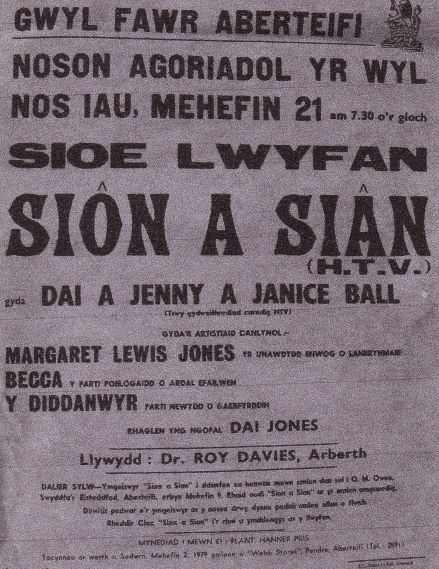
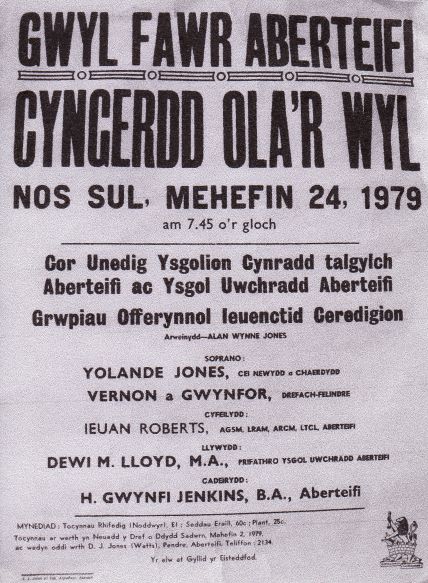
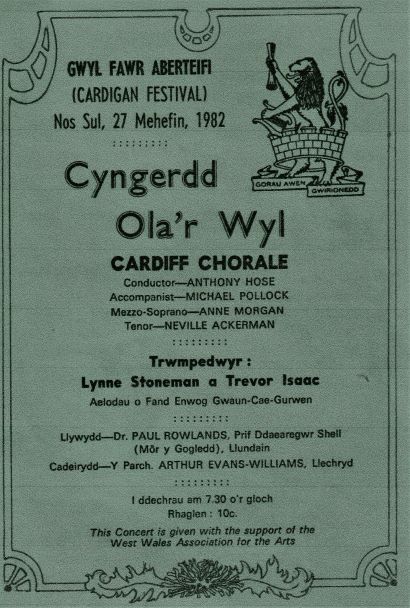
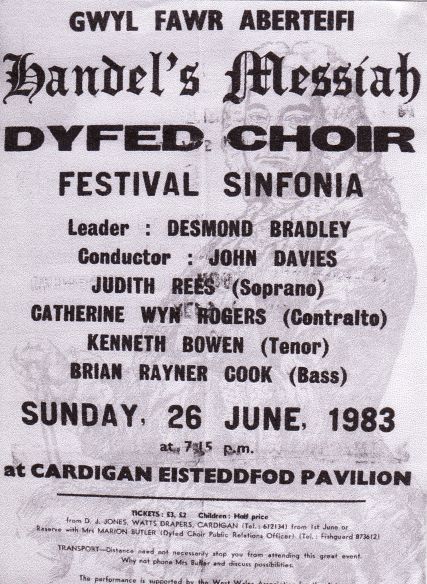
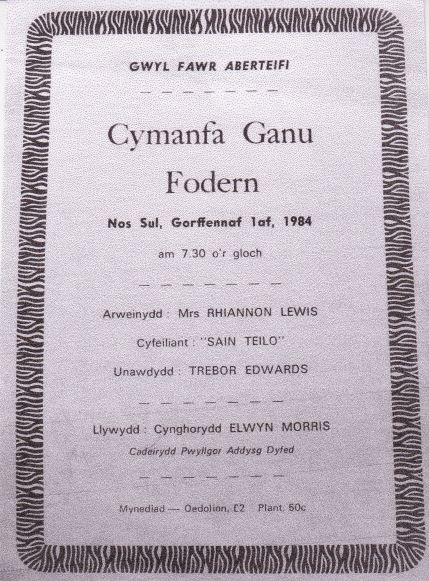
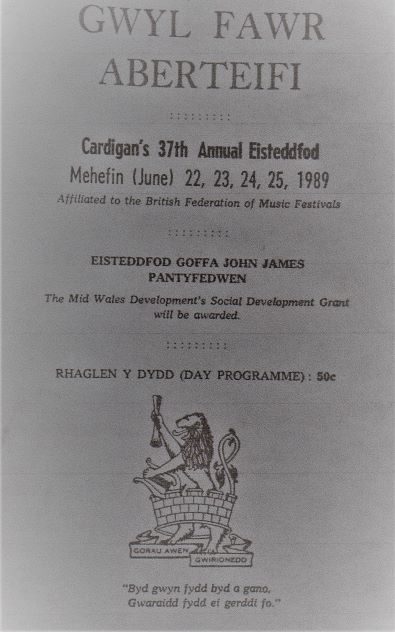
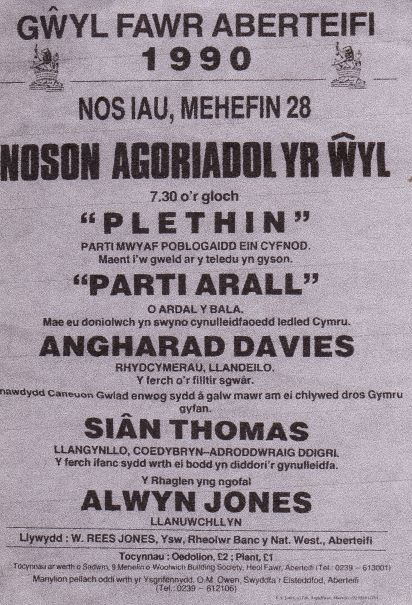
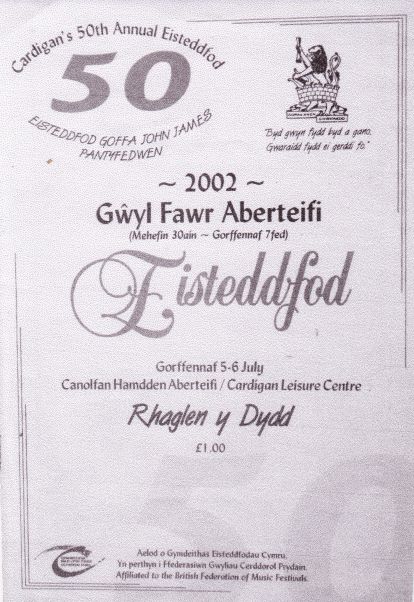
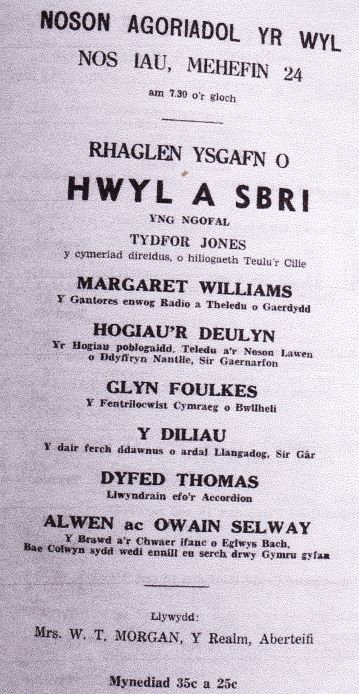
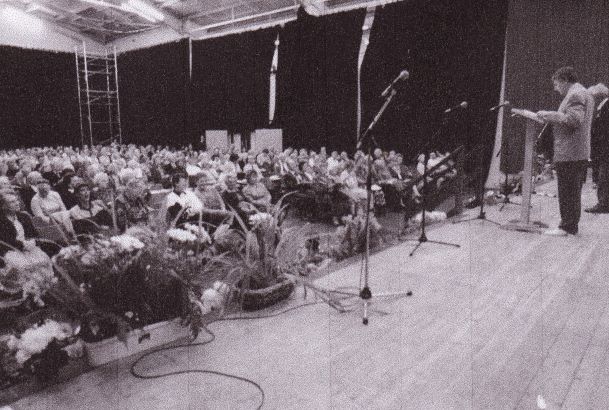
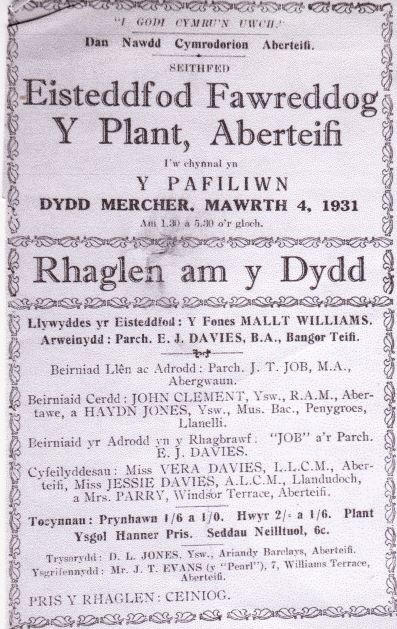
Due to Covid restrictions the eisteddfod will not be held this year again. Never mind – relive previous eisteddfodau here with a selection of programmes , posters and photographs from Keith Ladd’s collection.

Programme cover for the 1898 Eisteddfod. The chair winner was the Mr D B Jones, Co-op stores, Blaenau Festiniog but he didn’t turn up so the ceremony was not held.

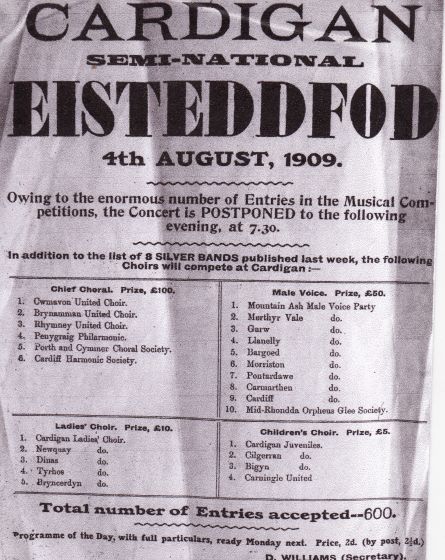
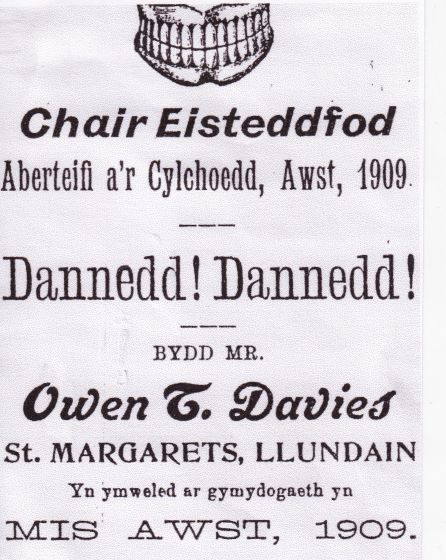
The 1909 Eisteddfod was a notable event with thousands attending from all over Wales. It was held in a marquee at Parc-y-rifle. The chair winner was Thomas Evans (Tel), of Cwmamman, Aberdare, but a native of Cardigan and in fact the nephew of the town’s most famous poet Telynog. For more about Tel click here.
Cynan awards the Crown to Dic Jones in 1955
Standing back row: Terry Thomas, Morris (Borough Surveyor), Alun Tegryn Davies, ?, Borough Treasurer, Berwyn Williams, ?, Charles Williams, Revd Milton Jenkins, Lewis, David Peregrine, Richards, Revd Arthur Evans-Williams, Revd Arwyn Phillips
Sitting in the front: Williams, Gwynfi Jenkins, Parry?, Owen M. Owen, Price, ?
Ruth Pritchard, Cynwyl Elfed, the first woman to win the chair – in 1995.
Owen M. Owen (1912-1991), was appointed Secretary in 1953. Managed a shop in Maesglas. Town councillor and three times mayor of Cardigan – 1975, 1977, and 1989. District councillor and chairman in 1979. MBE in 1979.

Cardigan People 51: Wyn Lewis Jones (Wyn Fflach; 25.9.1959-24.6.2021)

Wyn and Elin Fflur.

Thanks to Keith Ladd for this photograph, taken in Cardigan market.

Keith extends his sympathy to Wyn’s family on their loss.

Cardigan People 50: David R. Edwards (1964-2021)

Datblygu’s David R Edwards: a brave, brilliant interrogator of Welsh culture, Elis James , The Guardian

Cardigan People 48: Edward Wollstonecraft (1768-1849)

Edward Wollstonecraft was buried in Cardigan cemetery on 17 February 1848 [B 2]

Browsing through the Burial Records it was the surname that first drew my attention to this particular entry. Was he related to Mary Wollstonecraft,  best known for A Vindication of the Rights of Woman (1792)? [Spoiler alert – yes he was.]

Edward Wollstonecraft was born in 1768 and spent much of his adult life as a merchant in Gibraltar. His wife’s name was Mary. He retired to live in Carmarthen. How he ended up in Cardigan cemetery I’m not sure.

Here is a short description of the gentleman by his great nephew Godfrey Wordsworth Turner:

He was in England when I was a child of very tender years, and stayed in our house till I was nearly seven; and again he visited my father, his nephew, when I had reached the age of fifteen or sixteen; after which time he retired to a small estate in Carmarthenshire, where he died.

One of his excellent traits was the love of educating children and grown persons less informed than are most children. It was a much commoner thing in those days than it now is for servants to be wholly illiterate; and wherever, and whenever, the grandly simple benevolence of this venerable man led him to detect a case of that kind, he instantly set himself to work, in his own direct and efficient way, to remedy the defect.

My father’s household owed much to his labour. A serving-woman who, when not young, and not comely, was unable to tell one letter from another, learned to read well and to write a very neat hand from his tuition; and could draw up the bill of fare for dinner, not in bad French but good English.

Art Studies of Home Life by Godfrey Wordsworth Turner (daphnejohnson.co.uk)

And his relation to the famous Mary? Well Edward’s father Edward Bland Wollstoncraft (1735/6—85) was a half-cousin to Mary (1759—97).

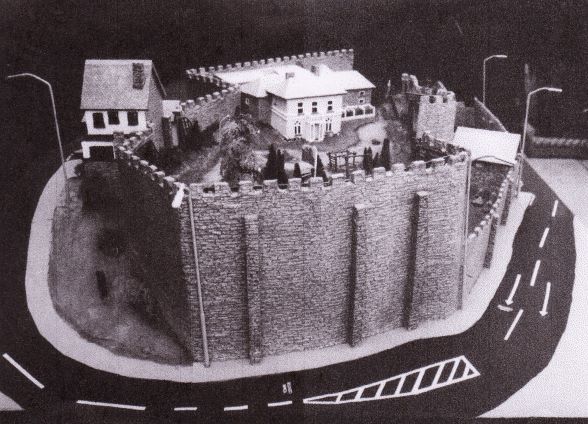
Cardigan Castle

A level Craft, Design and Technology Project (1990): A vision of what Cardigan Castle could look like in the future …

Entrance to the castle

Children’s play area on the centre lawn

The castle walls

Gorsedd stones (Eisteddfod 1976) (bottom left)

Welsh Tea shop and Craft centre (centre)

Geler Jones’ Agricultural Museum (top right)

Staff car park (bottom right)